Education
Lisbon Montessori School and the Peaceful Classroom
What a real Montessori classroom feels like — quiet, structured, and full of natural learning
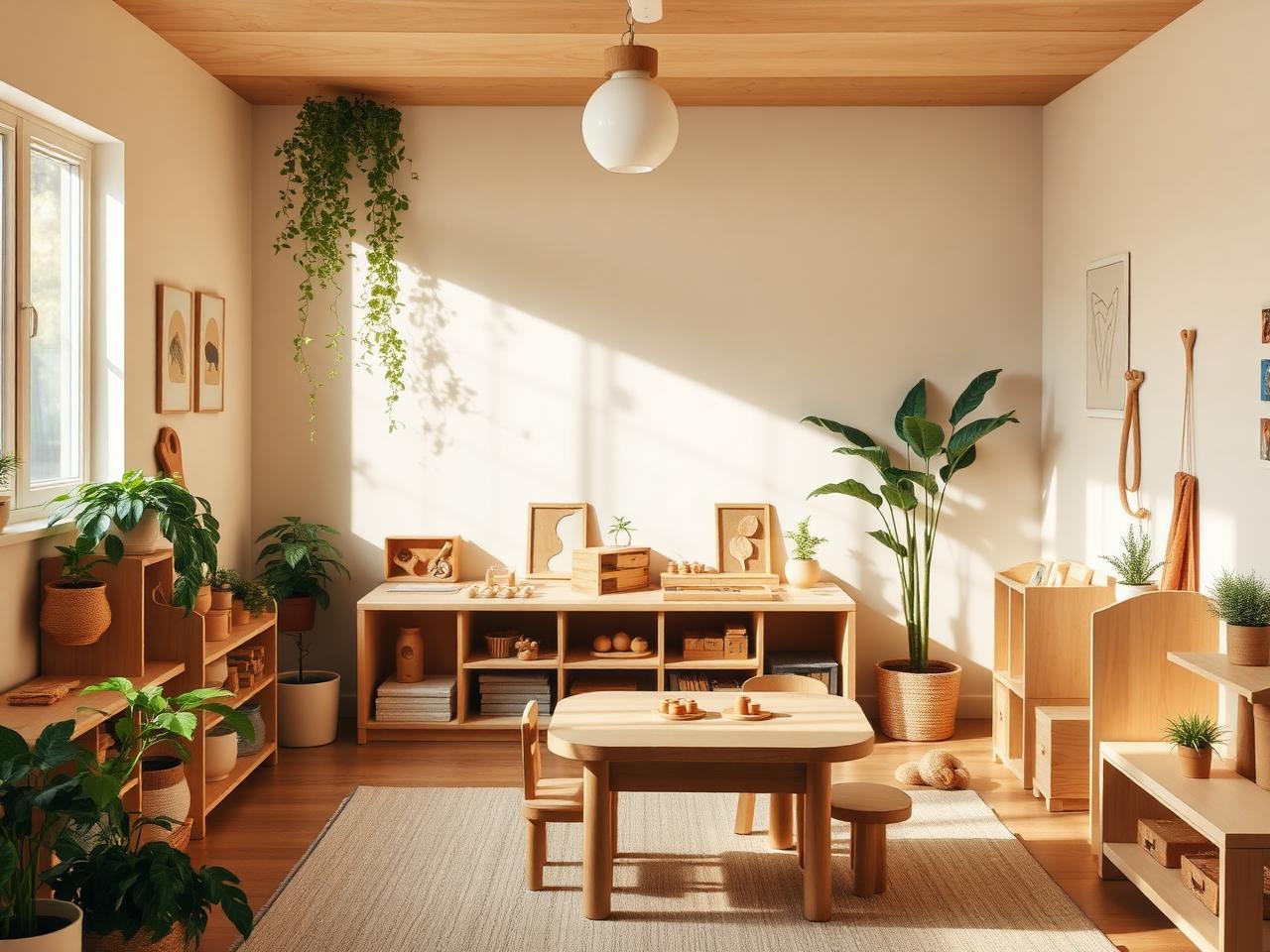
Let's talk about Montessori. Nowadays, everything is Montessori. Every second kindergarten has "Montessori" in its name and some wooden furniture to prove it. But Montessori is so much more than cute little wooden furniture and earthy-toned toys. It's a philosophy. It's a way of not teaching but guiding. It's quiet, but not boring. It's structured, but allows freedom.
This week I visited two beautiful Montessori schools in Cascais. One of them was Lisbon Montessori School, where I had the pleasure of observing two classrooms — preschool and upper elementary. This observation day wasn't about interaction; it was about quiet observation of the flow of the classroom, the environment, and how the children behaved. I soaked in every moment, every feeling and every word I heard — and I'd love to share it with you.
🌱 A Quick Lesson for Parents: What Montessori Really Is
Montessori education is a holistic, child-led approach to learning developed by Maria Montessori. It focuses on nurturing independence, confidence, creativity, and a genuine love of learning. Rather than traditional teacher-led instruction, Montessori classrooms are carefully prepared environments where children are encouraged to explore, discover, and learn at their own pace using hands-on materials. The method emphasises respect for each child's natural development and supports not only academic growth, but also emotional, social, and practical life skills.
Children in Montessori settings are given freedom within clear boundaries, allowing them to choose activities that match their interests and developmental stage. Mixed-age classrooms encourage collaboration, empathy, leadership and peer learning, while teachers act more as guides and observers than lecturers. Montessori also places strong importance on concentration, problem-solving, self-discipline, and real-world experiences such as cooking, cleaning, gardening, and caring for the environment. The overall goal is to help children become capable, curious, independent individuals who are motivated to learn not because they are forced to, but because they genuinely enjoy the process of discovery.
🌿 The Prepared Environment
So now that we have that bit out of the way, let me tell you what I actually saw in the two classrooms. Let's start with the environment. Like we read above, Montessori classrooms are prepared. They're not full of random toys, but carefully selected materials suited to the age group.
Montessori classes are mixed-age to allow for learning between older and younger children who help each other. Here in Cascais it's 3–6, 6–9 and 9–12, and then there are adolescent programmes. Usually these are three-year cycles, as that's how the learning is structured — the goals are cycle-based, so schools prefer if children stay for the full cycle to fully benefit from this type of learning.
🌼 Inside the Preprimary Classroom
In preprimary, the classroom was bright and full of natural wooden materials — lots of tools like bells, shapes, and blocks. There were plants, reproductions of famous paintings, students' artwork, a small sink, and a space for everything. The classroom offered many different materials and work stations, but it didn't feel cluttered. There was also a small outdoor space with a wooden table and benches where children could snack at any time.
Despite the fact that everyone was busy doing something, the classroom felt relaxed and peaceful. I watched the interactions between the children. Two small boys were building a bridge out of wooden blocks and communicating respectfully, almost like grown-ups. Another child picked up a child-sized toolkit for washing windows and went off to wash. Another girl was painting, another was sawing. A little girl picked up a writing task — spacing letters — and sat for a moment with the teacher, who helped her understand it. This sparked interest from other children who maybe weren't so interested before, but now their curiosity was awakened.
This is how learning happens in a Montessori classroom — naturally. The children are allowed to walk around freely and choose any task available. Surprisingly, nobody looked bored. They can look for what interests them.
The teachers aren't even called teachers — they are called guides, and it makes sense. They don't throw knowledge at children who aren't interested. They wait for the child to pick up on something and then guide them through the process. They leave the task of learning to the child. They facilitate rather than force knowledge.
The children are also taught to clean up after themselves, so despite having so many stations and tools, the classroom felt surprisingly clean. The owner of the school, Mrs Ivona, told me that smaller children who join come for half-days, and they only transition to full days when the guides decide they are ready. So this is not a drop-off-and-forget type of school — it requires some flexibility from the parents.
📚 Upper Elementary — Calm on a Testing Day
Now, onto the upper elementary, which felt a bit like the preprimary but with bigger kids. I was really stunned by how peaceful and relaxed everyone was, considering it was a testing day for the older children. You'd expect nail-biting and nervous revision — but there was none of that.
The children were working in small groups on different projects — Portuguese language, geography, maths and so on. They asked each other questions when they needed help. The environment was simple, natural, and felt a bit like a study room at home. But that doesn't mean they didn't have access to equipment — there was a microscope, endless books, a computer for research, and lots of DIY materials.
Just like in the younger classroom, the children here are free to snack — within a particular window of time, of course — at any point during the day, so the three-hour work cycle isn't disturbed. And that is one of the core principles of Montessori. If children learn to focus from an early age, they can work on a project of interest for a longer period of time.
From Year 2, the children are tested twice a year to make sure they are aligned with curriculum goals — which is a positive for more traditional parents who still want to know if their child is "on track." It was such a free-flowing atmosphere. The children knew what to do, nobody was pressuring them, and they simply focused on their work. Even my presence didn't seem to bother them at all — they smiled politely and went back to their projects.
💛 My Honest Reflection
I personally find Montessori very exciting and inspiring. I think maybe, as a parent, I'm not quite ready yet to have no structure in my child's education — and I do enjoy the fact that Montessori provides freedom within boundaries.
So for parents who are like me but still want their children to learn "the alternative way" — I think this is absolutely something to look into. I know that I will be.
If you are exploring alternative education and need guidance, reassurance, or simply someone who understands the journey — I'm here to support you.
Kasia,
Founder of Roots & Pebbles
Alternative Education Guidance.
Curious about Montessori for your child?
Let's talk it through.
I've visited the Montessori schools in and around Cascais. In a free 15-minute call I'll share what each one feels like in practice and help you weigh it up honestly.
Book a Free Discovery CallIf you are an alternative school and would like to be reviewed and included in my directory, feel free to reach out:
👉 www.rootsandpebbles.com
Stay in the loop
Get new articles by email
Honest reflections on alternative schools and family life in Portugal — sent only when there's something new.